Living a Community Life: From Dream to Daily Practice
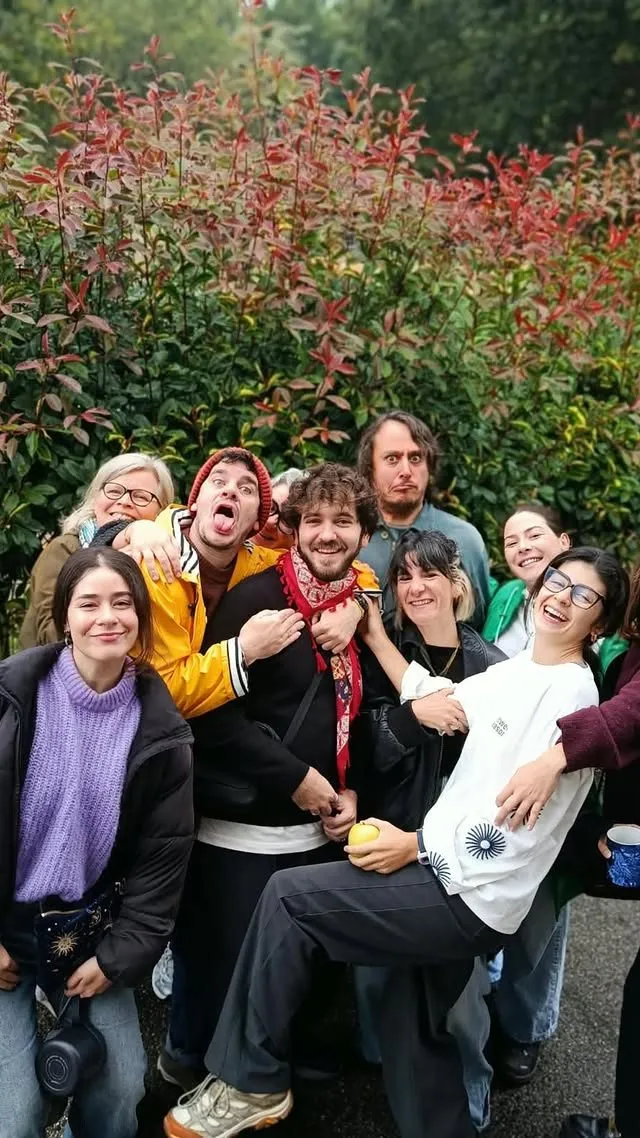
I had a dream of walking at the speed of my thoughts, surrounded by nature and like-minded people. Not running from one notification to the next, not living in a flat where I barely knew the name of the person next door. Just walking, thinking, and sharing the day with people who wanted the same thing.
“I like walking because it is slow, and I suspect that the mind, like the feet, works at about three miles an hour. If this is so, then modern life is moving faster than the speed of thought, or thoughtfulness.”
Rebecca Solnit, Wanderlust: A History of Walking
In Anceu, a small village in the hills of Ponte Caldelas, in Galicia, we have spent seven seasons trying to live at that speed. This post is about why so many people are looking for a community life right now, and what it takes to turn that wish into a way of living.
Why everyone is talking about community
Articles and posts about uncertainty, loneliness and the need for community are everywhere these days. Remote work gave many of us freedom, but it also took away the office kitchen, the colleague who asks about your weekend, the small rituals that hold a week together.
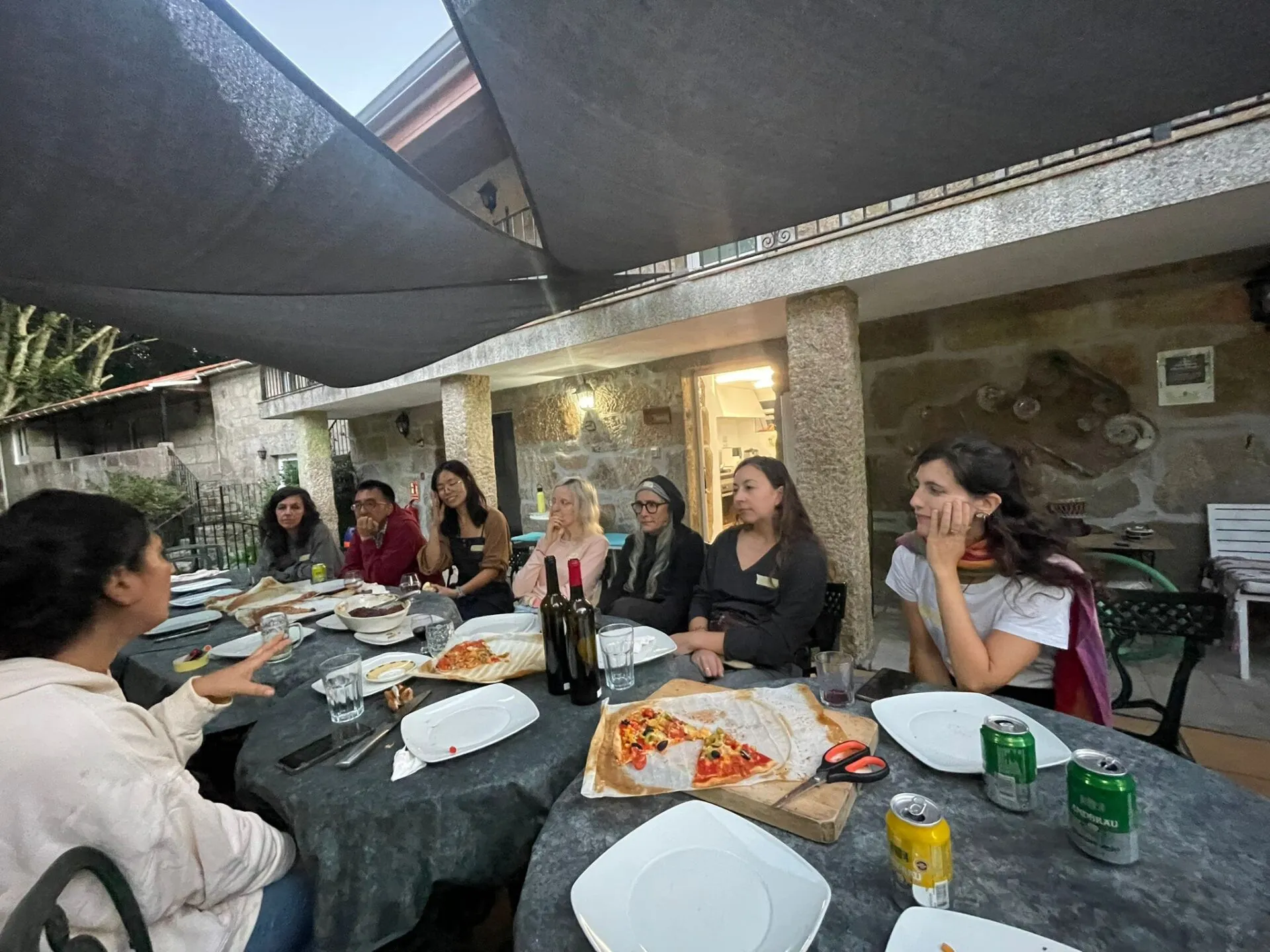 The office kitchen, replaced by a terrace table.
The dream of living in a community with friends has been in the air for years. Perhaps it is also a story we have all been told, rooted deep in our genes: for most of human history, nobody lived alone. We cooked together, raised children together, shared tools, land and worries.
So the question is not whether people want community. It is how we make it happen. How do we turn this story into a way of living?
From digital nomads to people who want to stay
During and after the pandemic, we saw a huge wave of digital nomads. Borders closed, cities emptied and companies suddenly accepted that work could happen anywhere. For many remote workers looking for a sense of community, it felt like a gift.
We saw it here too: laptops, video calls, and people discovering that a village with good fibre could be a better office than a city centre.
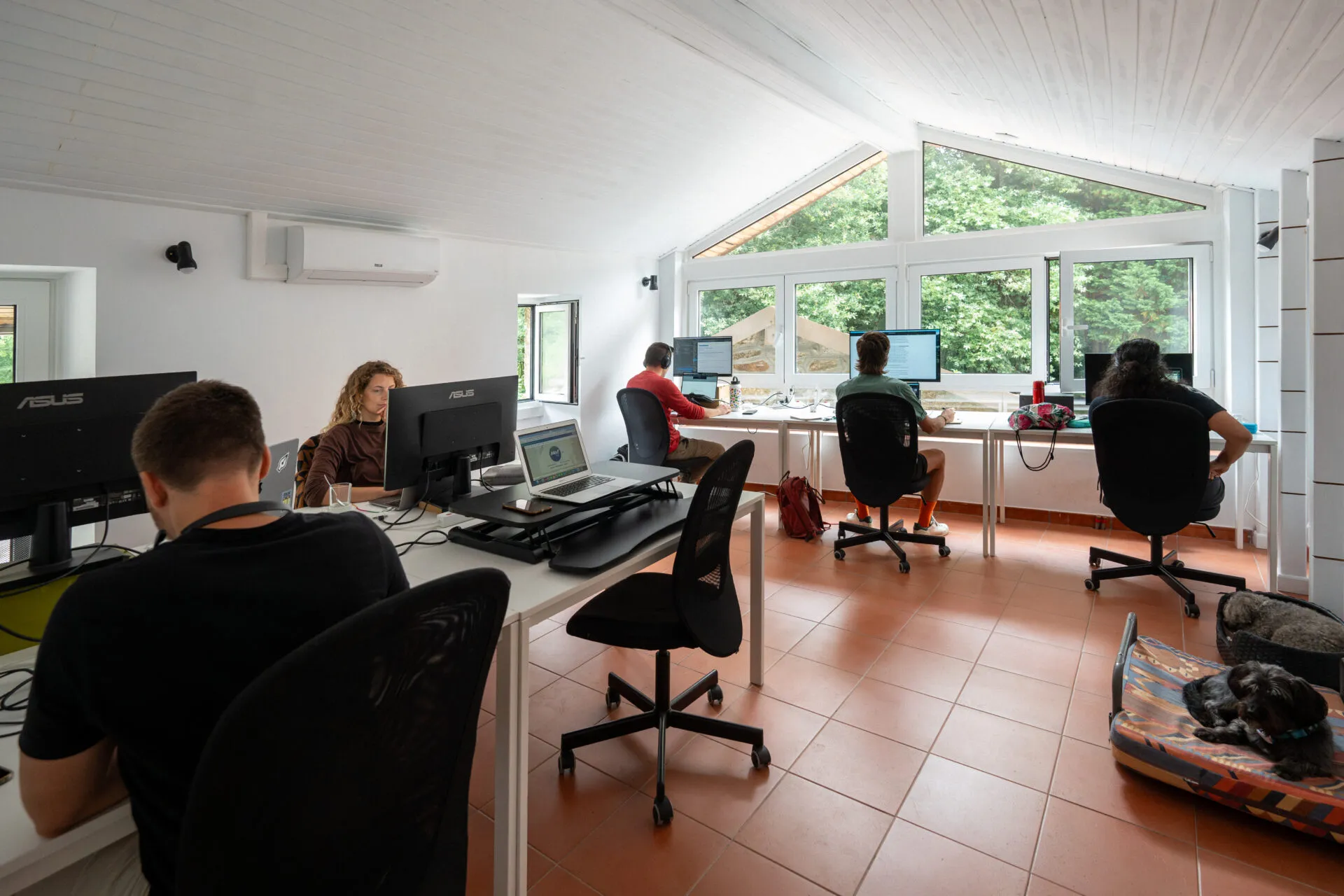 Good fibre, big windows, and a dog asleep under the desk.
Now there is another shift. More of the people who arrive see this way of living not as a short-term fix but as a long-term commitment. They want to know the baker’s name, learn some Galician, plant something and be around when it grows. Some come back season after season. Some never leave. That is why we stopped describing Anceu as a place for digital nomads and started talking about rural coliving.
The people who stayed
The best proof is a list of names. Thirteen people now live in and around Anceu because the coliving exists.
Nacho arrived at the end of May 2020, before the house had even opened, and never left. He is still part of the house and of Rural Hackers. He and his partner, Noe, have just bought a house in Ventín, ten minutes from Anceu.
Ana arrived in her motorhome with her dog, Lagun, after a year on the road. She rented a house nearby, started a local project with a woman from the village and created the Nomad Book Club.
Victor came as a Rural Hacker resident in April 2023. He taught digital skills to older villagers and English to local kids, and now, as a Rural Champ, coaches children in Ponte Caldelas, locals and colivers.
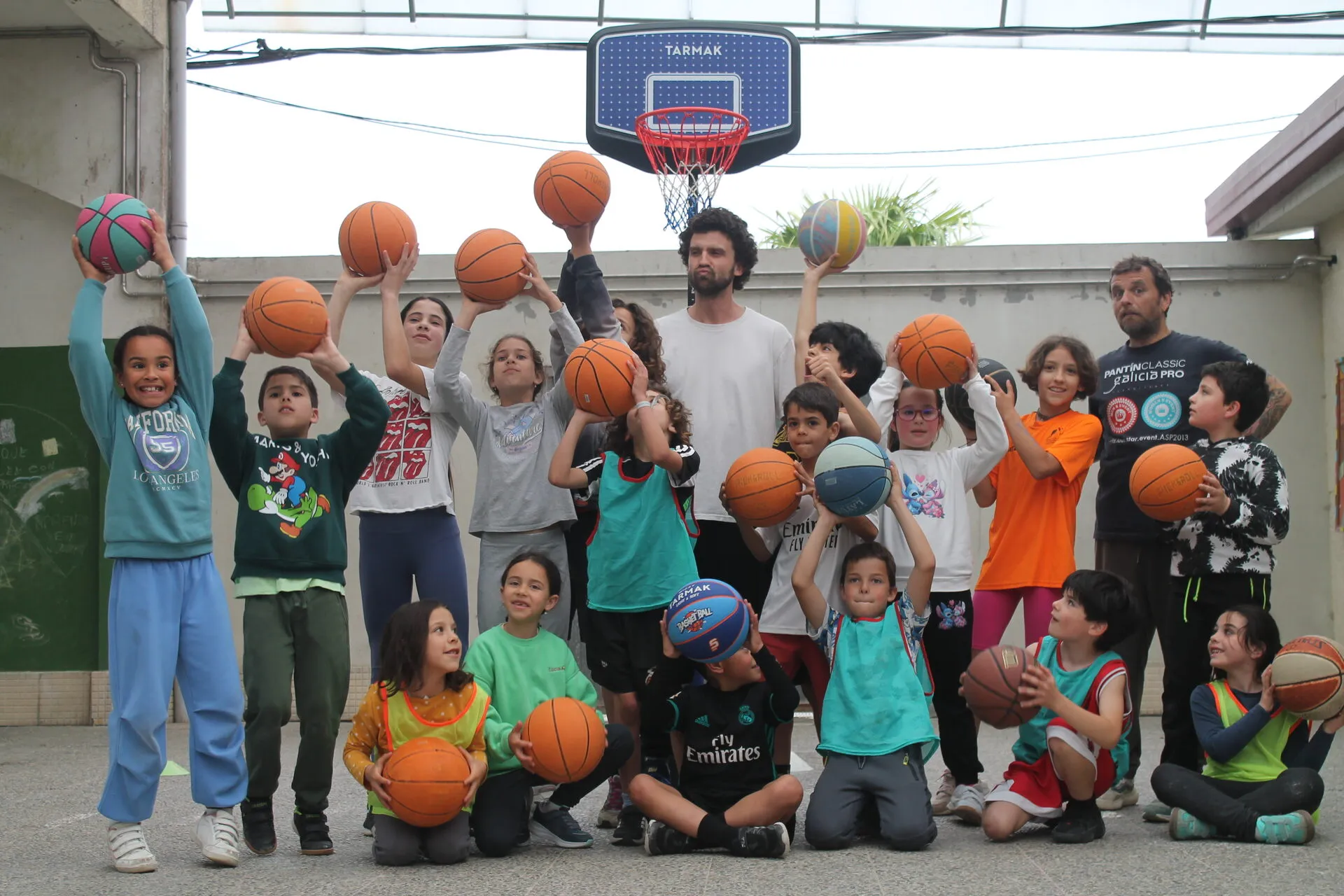 From coliver to coach.
Mery, who co-signs this post, is a designer and artist trained at the Krakow Academy of Fine Arts. Joe came to Anceu as a volunteer, fell in love with Mery, and now they both live in the village.
Andreea has written many of the stories on this blog. She met Flo here too, and they have just bought a house in the village.
María and Diego, who play in a band with Agustín, have just bought a house in Fornelos, a few kilometres away.
Even the team is a byproduct of the coliving. Africa first came from Arroelo in May 2020 and helped give Anceu the character it has today. She came and stayed. And Agustín, who opened Anceu, would not be living in this village without her.
In February, Berto and Granero arrive.
Most of them never planned to stay. They stayed because they found people, a place and a rhythm worth committing to. Three couples have just bought houses nearby. That is not a trend. It is a village getting younger.
The housing crisis and the right to a place to live
There is another reason community living is in the news. The housing crisis has become a headline across Europe, and thousands of people are protesting for one of our most basic rights: a place to live.
City rents keep rising while rural Galicia has the opposite problem: villages losing people, houses closed for decades, schools with fewer children every year. We have written about how rural coliving can help villages keep their population.
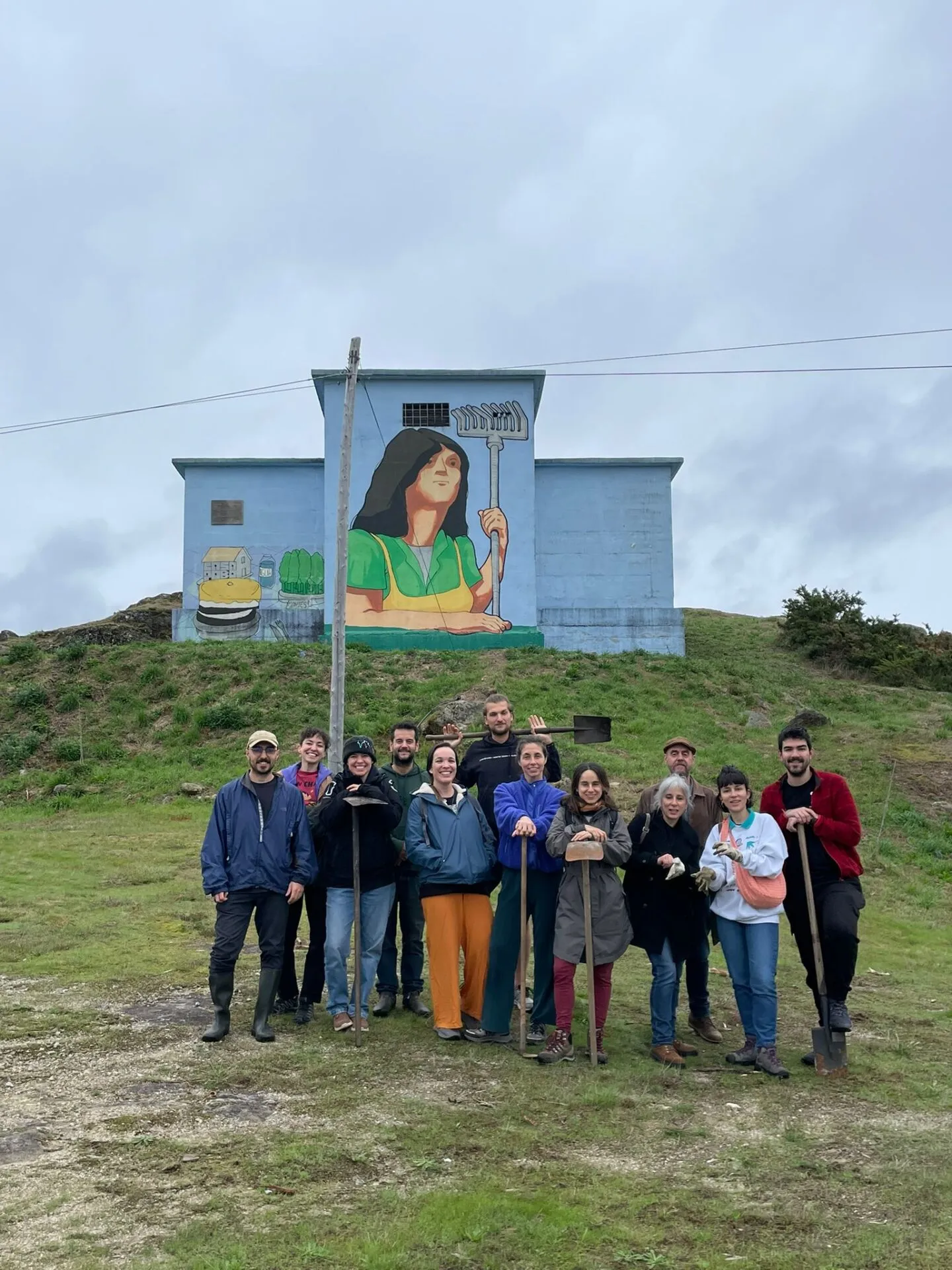 Work days are part of village life too.
Shared living will not solve the housing crisis on its own. But a house where twenty people share a kitchen, a garden and two coworking rooms uses far less than twenty separate flats, and it brings life back to a village that needs it.
Commitment: the missing piece
We all know about loneliness and housing. What gets less attention is commitment: to the land, to people and to shared values.
It may sound old-fashioned. We live in a culture where everything can be cancelled, swiped away or refunded. Community does not work like that. It is built in repeated, ordinary moments: cooking when it is your turn, showing up to the Monday meeting when you are tired, fixing the thing you did not break, staying when a conversation gets uncomfortable.
- Commitment to the land. Knowing where your water comes from, caring for the forest around the house, helping at the village festival in July.
- Commitment to people. Shared dinners, honest conversations, looking after each other when someone is sick or homesick.
- Commitment to shared values. Agreeing on how we live together and how we decide, and changing those agreements when they stop working.
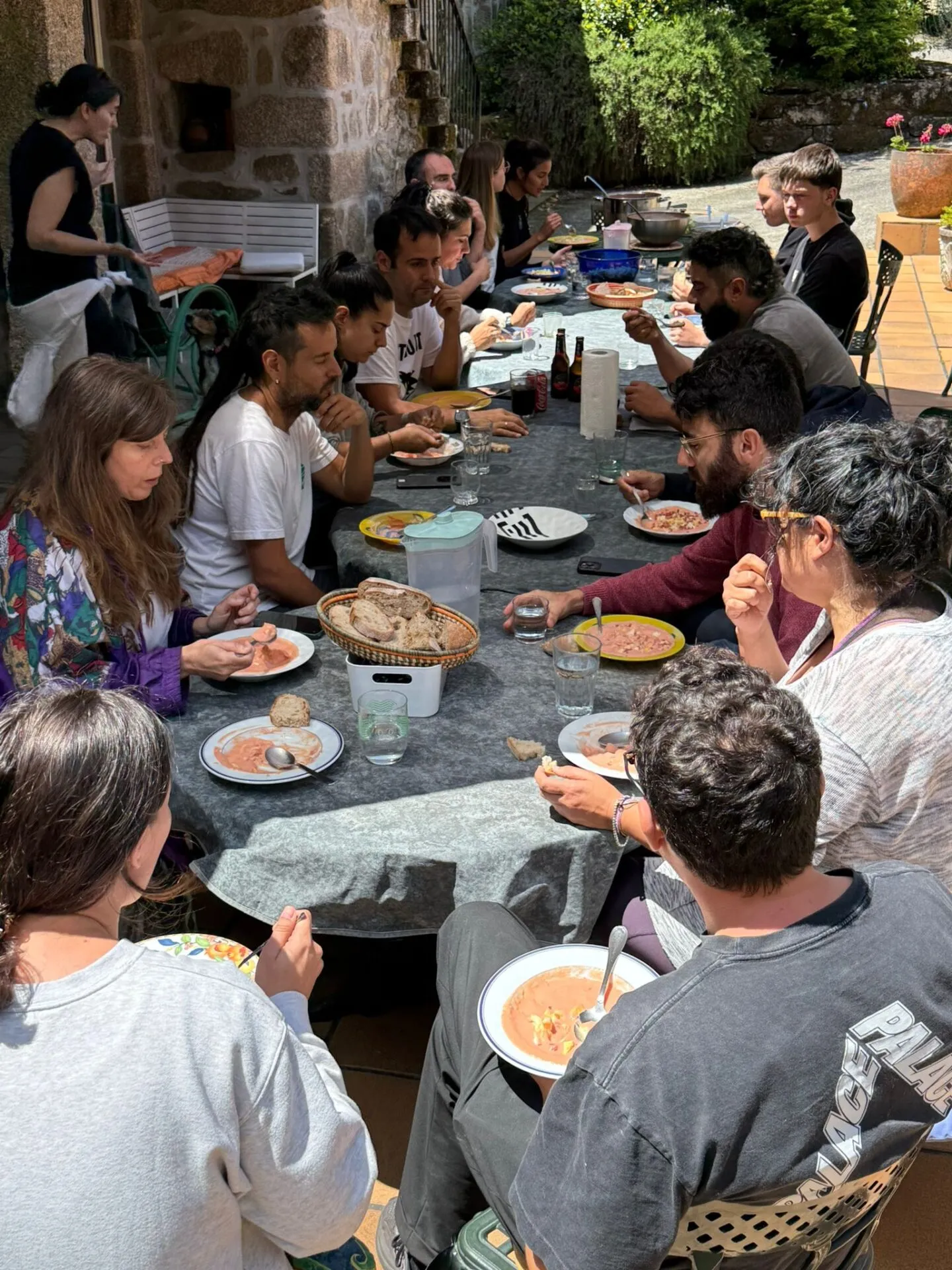 Cooking when it is your turn.
That is the difference between a nice place to stay and a community.
Someone has to take the first risk
Someone always has to take a risk. For us, it was a house in a small Galician village and the belief that people would want to come, stay and build something together. Seven seasons later, Anceu is still an experiment, with good years and hard ones. Community is not something you buy. It is a practice you join, and it only works if each person brings some commitment of their own.
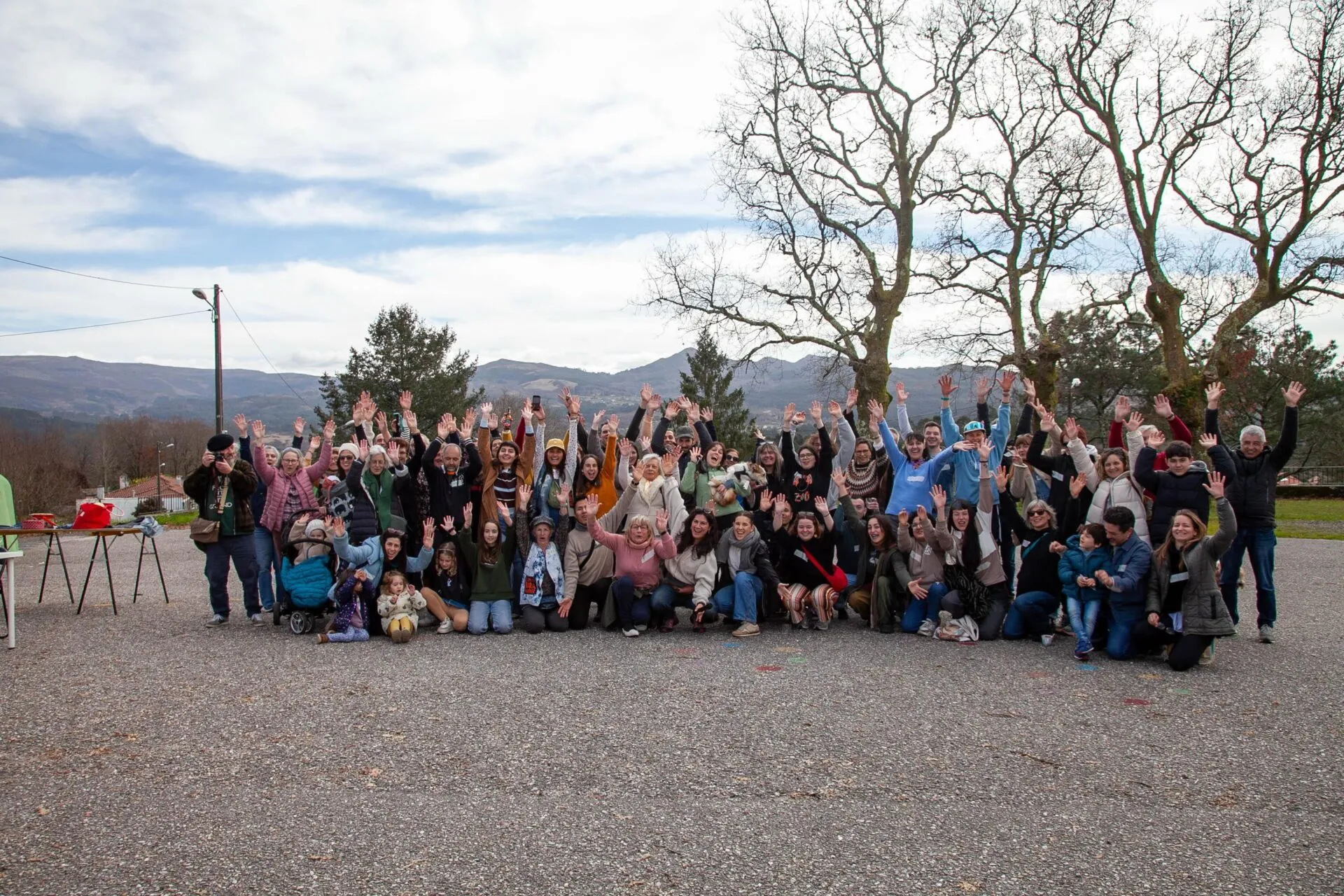 Seven seasons of people who decided to take the risk with us.
That is where the whole story begins: not with a perfect plan, but with a dream of walking slowly, among trees and people you trust, at the speed of your own thoughts.
If that sounds familiar, come and see what a community life feels like in rural Galicia.
See also: Why colivers return to Anceu · From coliver to neighbour: Victor, our Rural Champ · The team