Telling Anceu's Stories Back to Anceu
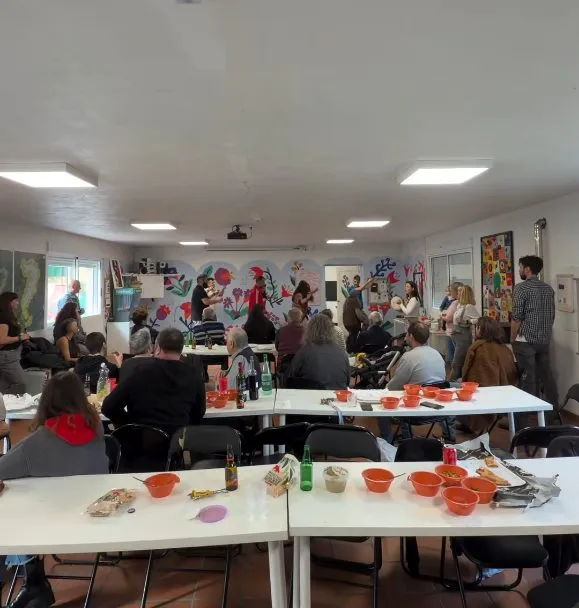
In our last post we wrote about November in the house: the vine turning on the pergola, the guest season closed, and the second edition of RURALI-ART already under way. On Sunday 8 November 2026 that work left the house and went to the Casa do Pobo, the village hall in Anceu, in Ponte Caldelas, rural Galicia.
The afternoon was called “Historias, fotos e festas de Anceu.” Neighbours and residents sat at long white tables under a floral mural, with terracotta tiles underfoot and daylight still in the windows. The artists staying in the house for the second edition of RURALI-ART, a Rural Hackers residency that began on 2 November, presented their projects to the people who live here. They were not starting from nothing. In late October the first edition had already spent seven days with the neighbours, recovering the memory of the village’s festivals. Sunday was the day that memory, and the new work around it, was told back.
The gathering had been announced for 13:00, with Brazilian food at 14:30. That evening, Rural Hackers wrote that they were celebrating after presenting the RURALI-ART projects to the neighbours of Anceu. The hall looked like a working room, not a gallery. In the foreground, orange bowls, bottles and a purple plate sat on the nearest tables. Further back, people listened and talked in front of the mural. It was the ordinary furniture of a village Sunday, occupied by a residency that had come to give its work back.
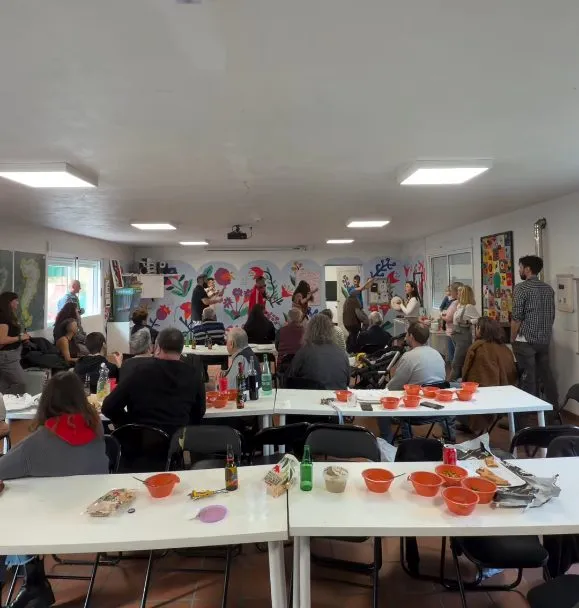 The Casa do Pobo, later in the afternoon.
Two lines of work, brought to the hall
That same day, Rural Hackers described RURALI-ART as a project that invites artists to the village to work on two lines: the recovery of the fiestas, and the stories of Galician migration to America.
The first of those lines already has a public home. After the October residency, Ola Caracola Estudio published an illustrated guide to the festivals of Anceu at festas.anceu.com, signed with the memories of the neighbours. That first week also left a recovered phone booth called la llamada de la memoria, a card game for the sobremesa, and a dance site at dance.anceu.com. Sunday did not have to invent a language for the village. It brought the festival work, and the new work from the second edition, into the hall so the neighbours could sit with it. One of the pieces on the wall on Sunday was a “Campo da Festa” poster from that work: a red festival ground, the church, a music stage, a pastry stall, boats, and, pinned around it, drawings of people in festival dress, a picnic and a ramo. The first edition had also prepared panels for the Casa do Pobo. On Sunday the hall was full of that kind of work.
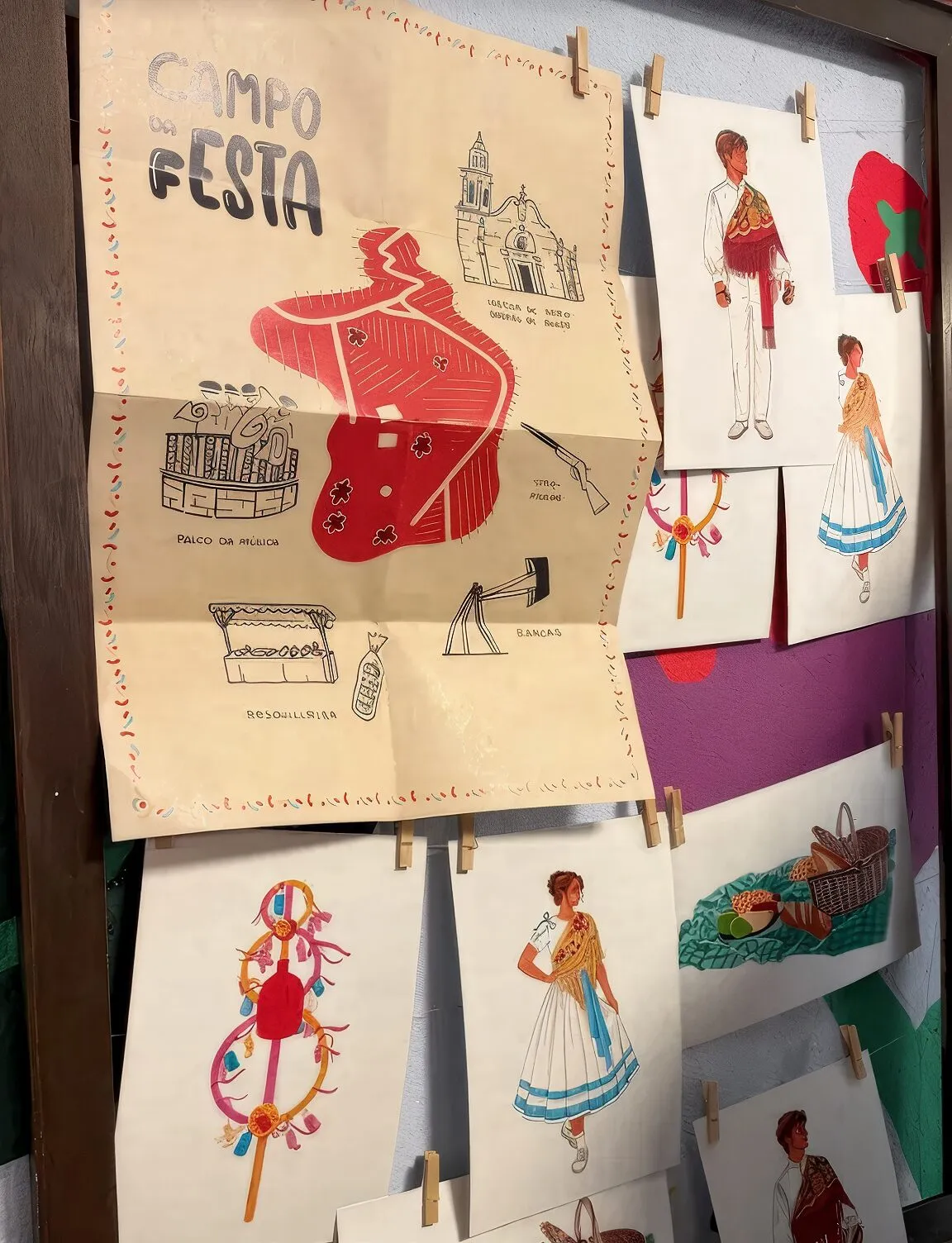 The “Campo da Festa” poster in the hall.
In the days before the gathering, work from the second edition was already visible in the house, including the “Mapas de vida” that Nerea Cordeiro had been making. On Sunday, people in the hall turned over small printed photographs and cards, looking closely at what had been gathered.
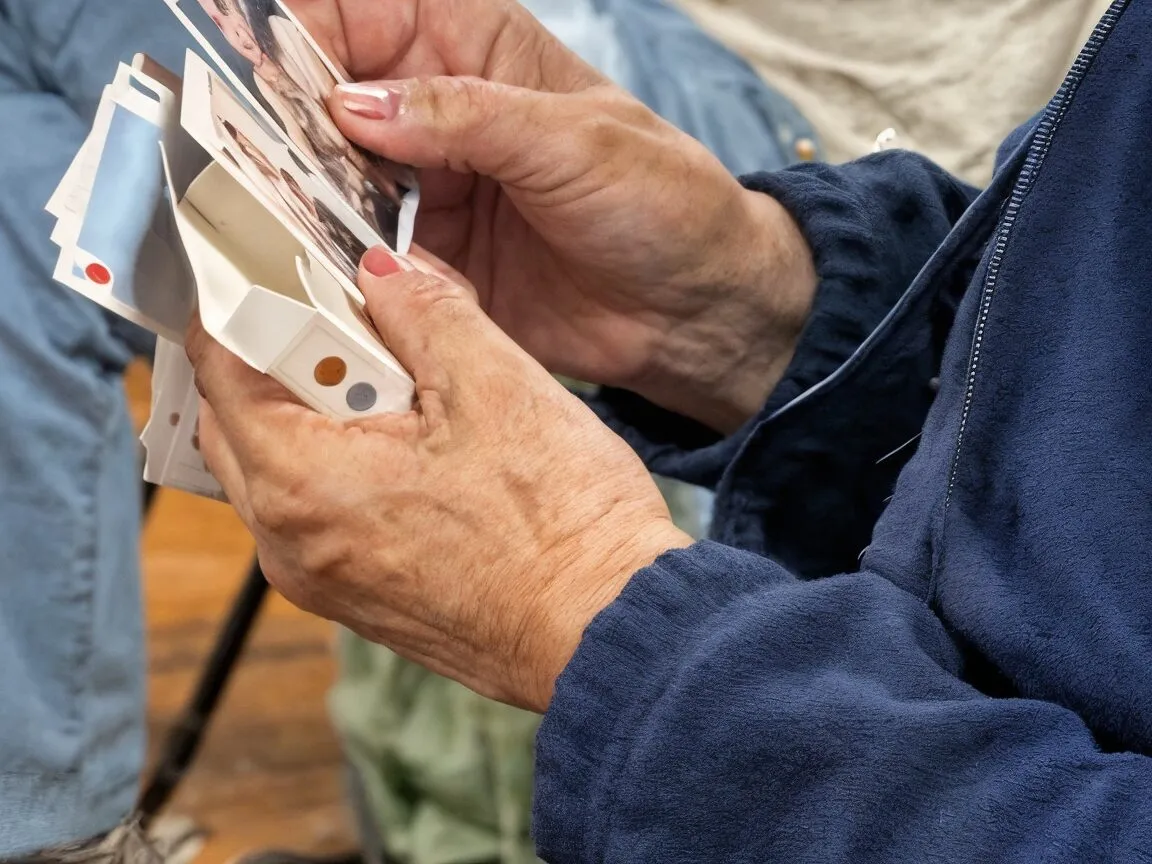 Photographs, passed from hand to hand.
A meal to honour a link with Brazil
The other line was movement and memory. Rural Hackers recalled that the fiestas of Anceu were also celebrated in Brazil, and that their chef, Granero, cooked Brazilian food to honour that link. The invitation to the afternoon had already said as much: stories and photographs of the fiestas, in the village and in Brazil, together with accounts of migration, and a Brazilian meal to go with them.
After the presentations, people sat at the same long tables and ate together. Plates, bottles and daylight from the window were still on the table. One of the stories put it plainly: community is created by sharing.
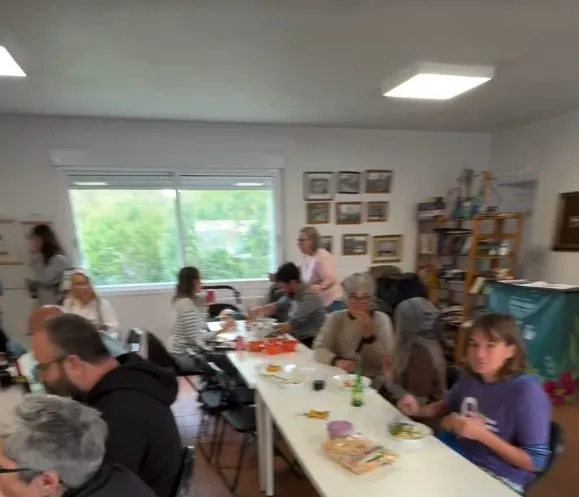 The meal after the presentations.
A local thread, still to be checked
On another wall hung a panel titled “O Primeiro Rural Hacker de Gaxate,” about a local figure, Wenceslao Barreiro. The story that accompanied it said they had discovered that there had already been a rural hacker or two in the territory years ago. The biographical claims on that panel still need checking, so we leave them here as a thread from the afternoon, not as a settled history.
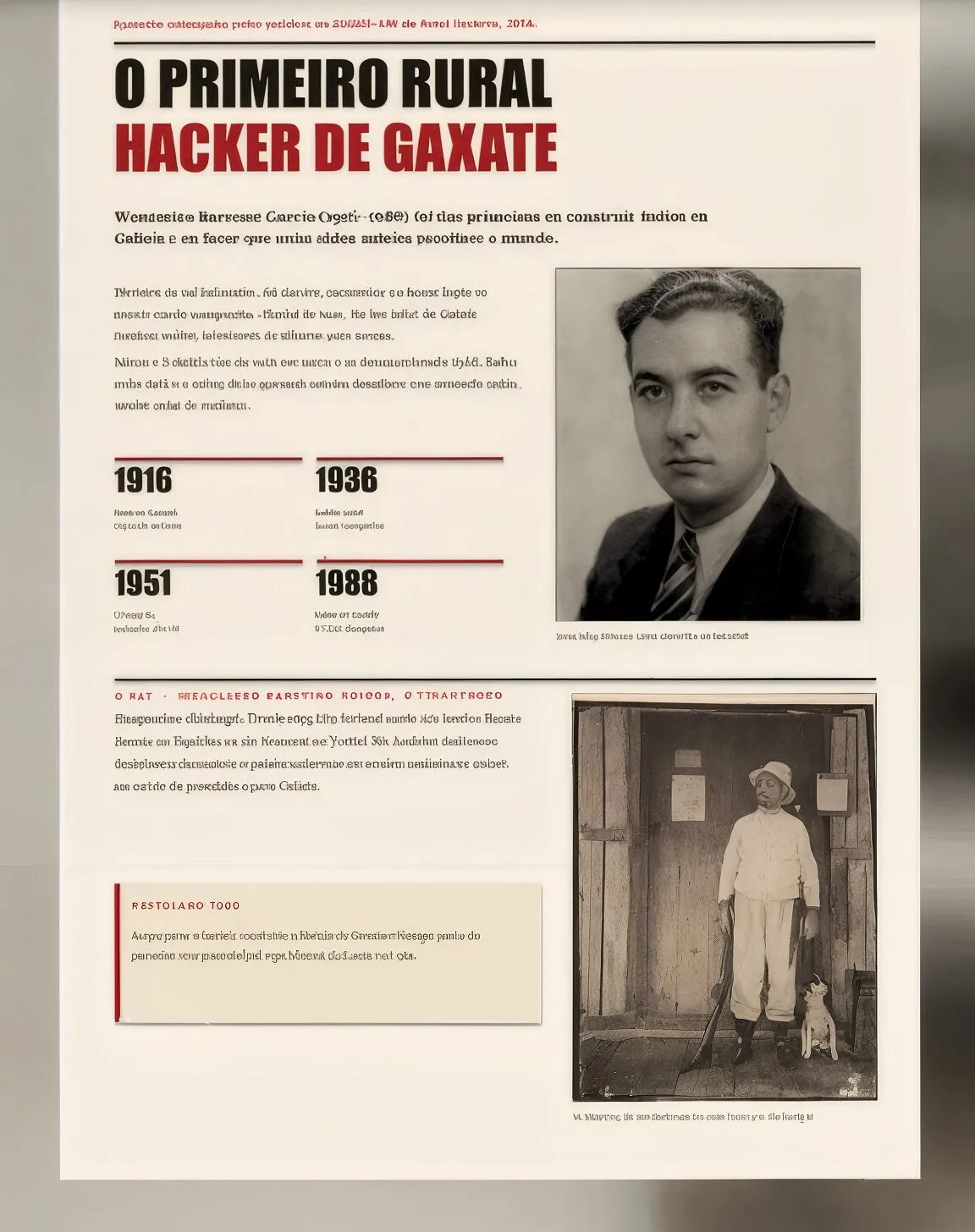 A panel from the afternoon, shared as it was shown.
What a Sunday in the village is for
The next day, Rural Hackers thanked @projoarmada for documenting the projects made during the residency. The best of the week, the note said, does not appear in the photographs.
This is the kind of Sunday the house is for. The first edition of RURALI-ART asked what Anceu remembers, and how that memory can be kept. The second edition is still in the house. On 8 November the two met in the village hall, not as a show for visitors, but as a conversation with the neighbours.
We have written before that we care more about belonging to this village than about being a stop on a nomadic route. A Sunday like this is what that looks like in practice: the work of a residency, taken to the Casa do Pobo, and a meal shared with the people who still live here.
In November the guest coliving season is closed; it opens again in January 2027. The village does not pause with the booking sheet. Residencies like this one keep a conversation going with Anceu, and then take it to the hall.
If you are looking ahead to 2027, details and dates are on the book page. Come and see for yourself. We would love to have you.
Join us at Anceu · Rural Hackers
See also: RURALI-ART: 7 Days, 12 Artists and the Memory of a Village · Autumn at Anceu · Season 7 at Anceu